-
Tian Dong Industrial Park, Decheng District Economic and Technological Development Zone, Dezhou City

What Is Borated Polyethylene—And When Do You Need It?
If you work around radiation, you already know one big truth:
lead isn’t the whole story.
Once neutrons join the party, normal lead shielding and thick concrete start to feel a bit “not enough”. That’s exactly where borated polyethylene comes in.
In this post we’ll keep it simple, talk real project scenes, and show a few tables you can actually use in design talks with your team or with your supplier.
Table of Contents
What Is Borated Polyethylene?
Borated polyethylene (often just “BPE”) is basically:
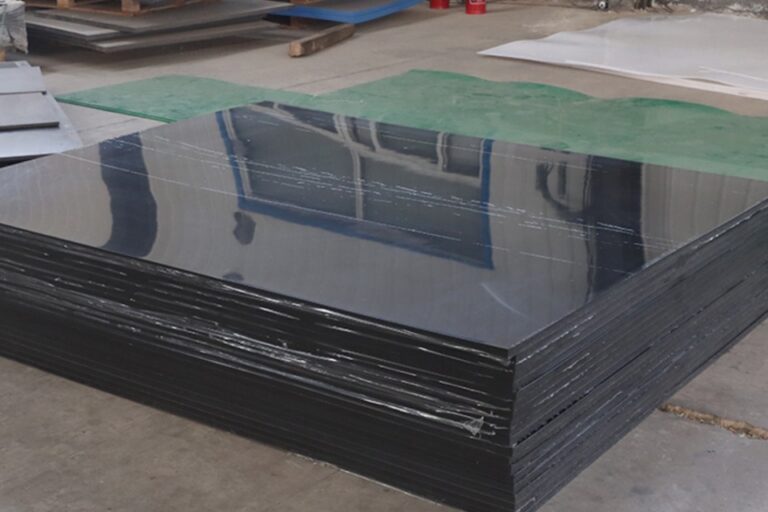
High-density polyethylene (HDPE) + a controlled amount of boron (usually around 5% by weight).
So you have:
- A plastic base: similar family as many UHMWPE / HDPE sheets we use for wear pads, fender pads, and ground protection & road mats.
- Boron inside: usually as boron compounds, mixed into the polymer during production.
In short:
normal PE slows neutrons, boron “eats” them.
That’s why radiation guys love this stuff.
How Borated Polyethylene Works for Neutron Shielding
Let’s keep the physics friendly.
Hydrogen slows the neutrons down
Polyethylene is full of hydrogen atoms.
Fast neutrons enter the material, bump into hydrogen, lose energy step by step. They become thermal (slow) neutrons.
You can imagine it like:
Fast neutrons = fast cars.
Hydrogen = a tight parking lot.
After a few collisions, the cars are not fast anymore.
Boron-10 captures the slow neutrons
Once neutrons are slow, boron-10 has a very high chance to capture them.
- Neutron hits boron-10
- Nuclear reaction happens (n,α)
- Neutron disappears, energy stays inside the shield
So the combo is:
- Hydrogen in PE → slows fast neutrons
- Boron-10 → absorbs slow neutrons
This is why BPE is a go-to material when you hear words like:
- mixed field
- neutron hot spot
- linac bunker
- duct penetration
- shielding upgrade
Where Borated Polyethylene Shows Up in Real Projects
Borated Polyethylene in Linear Accelerator Rooms
High-energy medical linac rooms are classic neutron scenes.
Typical pain points:
- Ducts and penetrations: air vents, cable trays, pipe sleeves
- Door frames and gaps
- Local “hot spots” on the dose map
In many hospitals and cancer centers, engineers will:
- Use concrete for the main bunker walls
- Add lead for strong X / gamma areas
- Drop in borated polyethylene blocks or panels around penetrations where neutrons peak
Often you hear phrases like:
“We need a BPE insert around the duct, otherwise the neutron reading at the maze exit is still too hot.”
Borated Polyethylene in Nuclear and Research Facilities
Borated PE is also common in:
- Research reactors and neutron sources
- Hot cells and shielding casks
- Temporary storage boxes for neutron sources
Here it’s used for:
- Modular shields around equipment
- Sliding or removable panels for experimental setups
- Local upgrades when the original concrete is not enough
In these scenes, engineers like materials they can machine, drill, and change later. Downtime is expensive. BPE panels, similar to HDPE plates, are easy to cut and bolt, so they fit this “real world” requirement.
Borated Polyethylene in Cargo Scanning and Industrial Neutron Systems
Think about:
- Cargo or truck scanning systems
- Some industrial neutron radiography setups
- Border / port security systems
Here you often see:
- BPE bricks or tiles lining shielded cabins
- Combined stacks: steel + BPE + sometimes lead
Operators just want one thing:
reliable dose reduction, simple to maintain, no drama.
BPE helps them control the neutron part of the field without using toxic heavy metals.
Borated Polyethylene vs Lead, Concrete, and Plain PE
You don’t choose BPE in a vacuum.
You compare it with what you already know: lead, concrete, and plain PE sheets.
Material comparison overview
| Material | Main target radiation | Neutron performance | Gamma / X-ray shielding | Practical notes |
|---|---|---|---|---|
| Plain PE / HDPE sheet | Fast / slow neutrons (moderation) | Good for slowing neutrons, weak for absorbing | Very weak | Light, cheap, easy to machine |
| Borated polyethylene (BPE) | Neutrons (moderation + capture) | Very good for thermal neutrons | Limited (needs partner) | Light, machinable, no lead, modular design |
| Lead sheet / lead glass | Gamma / X-ray | Almost no neutron effect | Excellent | Heavy, toxic, more regulation |
| Ordinary concrete | Mixed field, bulk shielding | Some moderation, limited absorption | Medium | Thick, heavy, depends on civil structure |
Key idea:
BPE doesn’t “kill” the need for lead or concrete.
It completes them:
- Concrete → bulk, civil structure
- Lead → gamma / X
- BPE → neutrons
In many dose reports you see this style comment:
“Gamma is under control, neutron dose at the duct is still high.”
That line is almost a direct hint:
“OK, time to add borated polyethylene here.”
Choosing Boron Content and Thickness in Borated Polyethylene
There are many grades: 3%, 5%, 10%, even 30% boron.
Higher boron usually means better thermal neutron capture, but also higher density and cost.
Typical boron content and usage scenes
| Boron content (by weight) | Typical density range | Typical thickness range | Usage scene (not exact, just guidance) |
|---|---|---|---|
| 3% BPE | ~0.95–1.0 g/cm³ | 10–100 mm | Low to medium neutron fields, basic room upgrades, pilot lines, simple add-ons |
| 5% BPE (very common) | ~0.95–1.0 g/cm³ | 25–50 mm standard | Medical linac bunkers, duct/maze shielding, many nuclear lab local shields |
| 10–15% BPE | ~1.1–1.2 g/cm³ | 20–150 mm | Higher flux research zones, compact modules when space is tight |
| 30% BPE | ≥1.28 g/cm³ | 10–200 mm | Very high neutron fields, special casks, advanced experimental setups |
You normally don’t choose grade alone. You talk:
- what neutron spectrum you have
- available thickness and space
- dose limits
- mechanical needs (can it carry weight? just a panel?)
It’s totally OK if your first design is not perfect. Many customers do one round of shielding, check the new dose map, then add extra BPE “last-meter” panels where hot spots still show.
How Borated Polyethylene Fits With UHMWPE Ground Protection & Base Mats
Your main market maybe is not radiation.
Maybe you focus on:
- Ground Protection & Road Mats
- Base Mats
- UHMWPE & HDPE sheets
- Big OEM/ODM, wholesale orders
So why talk about borated polyethylene at all?
Because in real projects, buyers like to bundle:
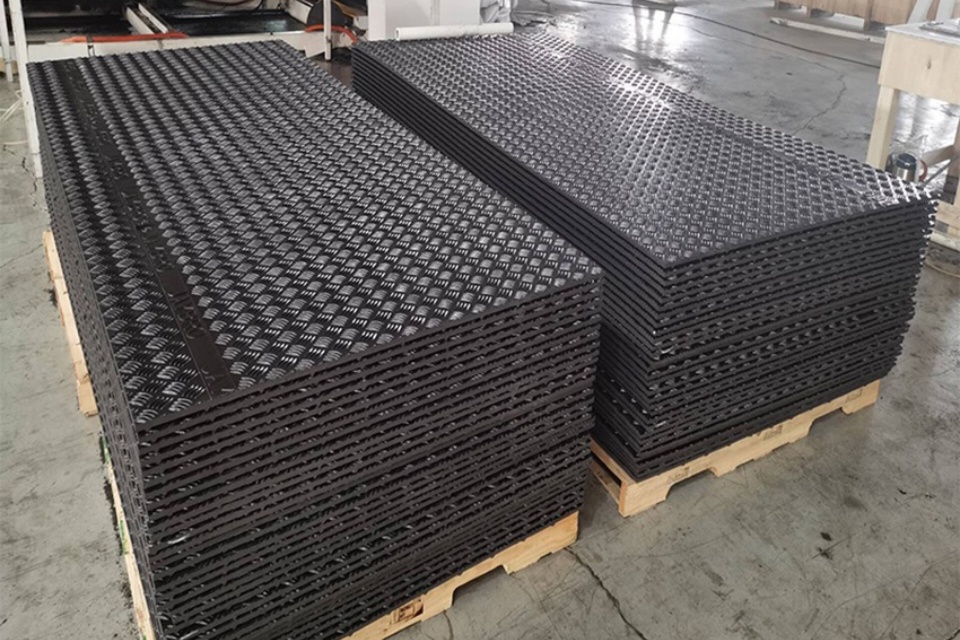
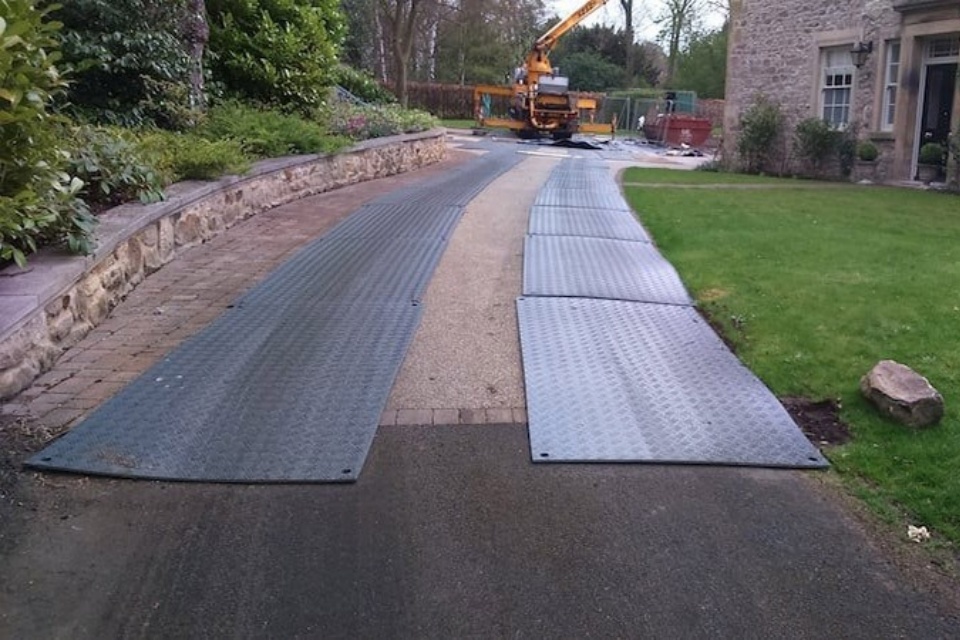
- One supplier for heavy-duty PE ground mats to protect soft soil, jobsite access roads, crane pads.
- Same group or partner for custom PE / BPE shielding panels, cut to size.
As a High-Performance Engineering Plastic Products Manufacturer, you already understand:
- sheet extrusion
- machining, chamfering, drilling
- logistics for big plates and mats
- bulk orders, OEM imprint, color, branding
That makes it easier to support people in radiation scene too:
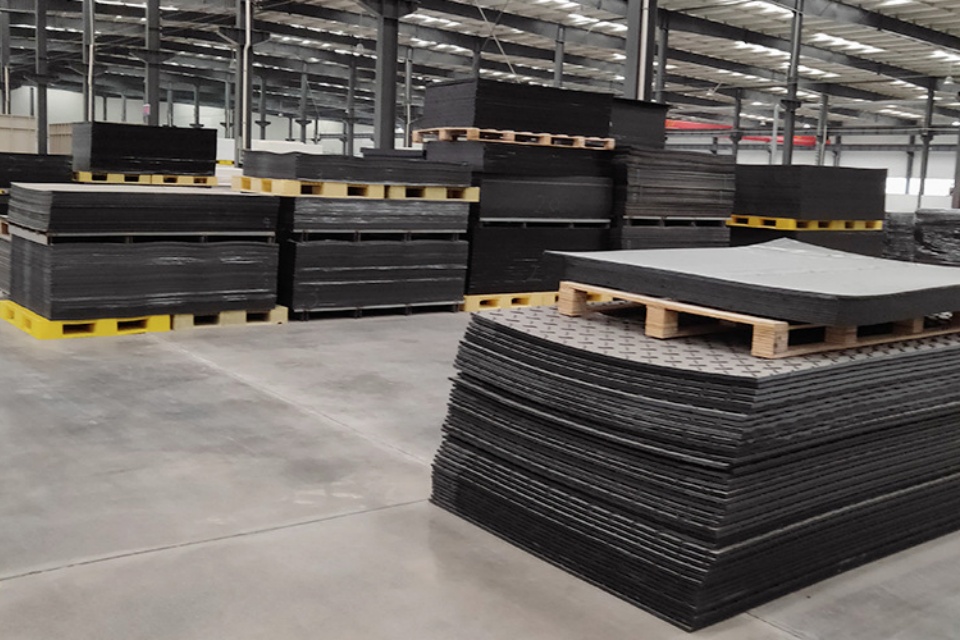
- Cut borated PE panels with the same CNC logic as UHMWPE sheets
- Chamfer edges so they stack clean, no sharp corner
- Drill holes for fast installation on steel frames or concrete walls
You can imagine a customer case like this:
They order UHMWPE ground protection mats for outdoor access roads,
and also ask, “Can you also supply PE-based panels for our shielding upgrade?”
At that point, Dongxing Rubber can step in as the group name behind material know-how, talking both:
- mechanical scene (mats, pads, base plates)
- radiation scene (BPE panels, wear plates, support blocks)
Even if the borated grade is made with a partner, customers feel better to talk with one technical team who already speaks their language: mixed field, linac bunker, turnaround time, OEM labels.
When Do You Actually Need Borated Polyethylene?
Let’s sum it up in plain words.
You really need borated polyethylene when:
- Neutrons are present, not only X or gamma.
- Your dose map shows neutron hot spots at penetrations, ducts, or maze exits.
- Lead and concrete alone cannot meet the spec without crazy thickness.
- You want something lighter, non-toxic, easy to machine and install.
- You plan for future modifications, so modular shields are better than fixed civil works.
If your scene is only:
- small X-ray room
- simple fluoroscopy
- low-energy gamma without neutron production
then you probably don’t need BPE at all. Plain PE or just lead and concrete is fine.
But once you hear:
- “high-energy linac”
- “neutron source”
- “research reactor”
- “cargo neutron scanner”
then borated polyethylene goes from “nice idea” to “almost standard item” on the BOM.
Final Thoughts
Borated polyethylene is not magic. It is just:
- polyethylene that slows neutrons,
- plus boron that catches them,
- packed in a machinable, light, and practical plate.
For a manufacturer that already works with UHMWPE & HDPE sheets, fender pads, outrigger pads, ground protection & road mats, ice rink boards, stepping into BPE panels is a natural extension.
You talk to the same type of customer:
project engineers, contractors, OEM buyers, wholesalers who want custom size, fast lead time, and stable quality.
Get the physics roughly right, listen to the customer’s dose map and pain points, then offer a neat, modular BPE solution. That’s usually enough to make the shielding guy smile and say, “Okay, this looks workable.”