-
Tian Dong Industrial Park, Decheng District Economic and Technological Development Zone, Dezhou City

Slide & Wear Rails: Designing Longer-Lasting Conveyor Guides
If your conveyor keeps screaming, wearing the guides, and eating chains, the problem is often not the motor. It’s the slide & wear rails.
In bulk handling, packaging, or coal bunker lines, many plants still run old steel guides or random plastic strips. Then they wonder why they fight “carryback”, noise, and crazy downtime every week.
Let’s walk through how to design slide & wear rails that last longer, run quieter, and are easier to keep alive in real production.
Table of Contents
Understanding Slide & Wear Rails for Conveyor Systems
Slide & wear rails sit under chains, belts, or product. They do three basic jobs:
- Support the load
- Guide the product or chain
- Take the wear instead of the steel frame
When you design them right, you:
- Cut friction and noise
- Spread impact in transfer points and coal bunker areas
- Protect the main structure from abrasion
- Make maintenance faster and more planned
At Dongxing Rubber, we see this every day in coal bunker limit plates, ground protection roads, and bulk conveyor systems. If the wear rail design is wrong, everything else becomes firefighting.
Material Selection for Wear Rails: Why UHMWPE Beats Steel
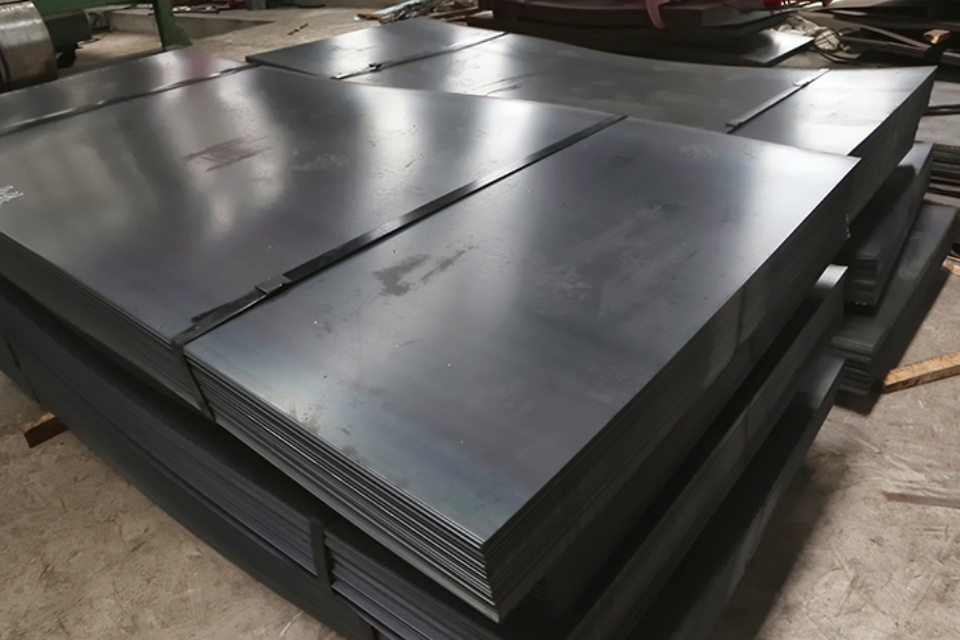
Many plants still use steel-on-steel contact. It works… but it hurts. The rail wears, the chain wears, the noise is like a small earthquake.
Ultra-high molecular weight polyethylene (UHMWPE) flips this.
Low-Friction UHMWPE Slide Rails
UHMWPE slide rails and wear strips offer:
- Very low friction surface
- High abrasion resistance
- Impact toughness even in cold enviroment
- Little water absorption and good chemical resistance
For coal bunker chutes, limit plates, or chain guides, UHMWPE helps the bulk material slide, not stick. It also prevents the classic “material hang-up” and “bridging” at transfer points.
Compared with steel:
- Steel gives stiffness but eats the chain
- UHMWPE gives smooth sliding and protects both chain and frame
This is why Dongxing Rubber uses UHMWPE plates and profiles in many coal bunker limit plates and related liners.
Stainless Steel Backing + UHMWPE Wear Strips: A Durable Combo
Sometimes UHMWPE strip alone is not enough. Heavy duty conveyors need both strength and low-friction wear surface.
A very common and reliable design:
- Stainless steel or carbon steel backing plate for stiffness and support
- UHMWPE wear strip mounted on top as the sliding layer
This combo gives you:
- Good straightness and rigidity from the metal
- Quiet, low-friction running on the UHMWPE
- Easy replacement of the plastic strip when it finally wears out
For coal bunker systems, you can think like this:
The limit plates and slide rails work as “sacrifice parts”, while the steel frame stays safe for many more years.
Designing Conveyor Guides for Lower Friction and Less Noise
Wear rail design is not only about material. Geometry matters a lot.
You need to think about:
- The profile shape of the rail
- How it supports the chain or belt
- How product moves through curves and merges
Conveyor Side Guides and Chain Support
Practical tips from the field:
- Use wide, smooth UHMWPE side guides where boxes or bags rub the sidewalls
- Use chain support profiles that match the chain form (for example S-type, C-type support rails)
- In curves and merges, design the rails to “lead” the product gently, not hit it like a wall
In real bottling or coal handling lines, this means:
- Less “shoulder rubbing” on cartons and bags
- Less belt mistracking
- Less “machine screaming” during start-up
Even if the line still make some noise, with good guides it’s more like a hum than a headache.
Alignment, Support Spacing, and Fast Maintenance
You can use the best UHMWPE material and still kill the rail early if the mechanical design is wrong.
Key things to check:
- Support spacing: too wide → the rail sags → chain or belt hits hard spots → local wear and hot spots
- Alignment: misaligned guides cause constant side load, and the rail “burns” in one zone
- Fast access: if the rail is hard to change, people will wait too long and run it until failure
Maintenance-Friendly Wear Rail Design
Good design habits:
- Use adjustable brackets for side guides, so you can fine-tune width for different product
- Design drop-in UHMWPE strips that you can slide out without cutting and welding
- Keep front covers and guards simple to remove, so cleaning is easy
In many projects, Dongxing Rubber customers tell us: after switching to UHMWPE guides with better alignment and supports, they feel the line is “less nervous”. There is still wear, but it’s slower and more predictable.
Yes, “less nervous” is not a lab term, but every maintenance engineer understand this feeling.
Matching Wear Rail Design to Harsh Environments
Not all conveyors live in clean, indoor packaging halls. Many run in:
- Coal bunkers
- Mining conveyors
- Chemical plants
- Outdoor loading docks
In these scenes, you need slide & wear rails that can survive:
- Dust and sharp particles
- Impact from large lumps
- Temperature changes
- Exposure to water, chemicals, or UV
For example, coal bunker limit plates made from UHMWPE:
- Reduce sticking and build-up on bunker walls
- Lower impact on steel shell
- Make cleaning easier and safer
You don’t want operators hammering on steel walls every week to break loose hang-ups. A good UHMWPE lining and slide rail design can almost remove that bad habit.
Design Factors and Their Impact on Wear Rail Life
You can use this table directly as a design checklist when you talk with your team or your supplier.
| Design Factor | Practical Tip | Impact on Wear Rail Life | Typical Scenario |
|---|---|---|---|
| Rail material | Switch from full steel contact to UHMWPE or HDPE wear rails on support zones | Lower friction, less chain and rail wear, quieter running | Packaging conveyors, chain transfer, coal feed lines |
| Backing structure | Use steel backing plate with UHMWPE wear strip on top | High stiffness + long wear, only plastic strip needs replacement | Coal bunker limit plates, heavy-duty impact zones |
| Profile and support | Choose rail profiles that match chain/belt, keep support spacing tight enough | Avoid sagging and point loading, reduce “hot spot” wear | Long conveyors, return runs, merge points |
| Side guides | Use UHMWPE side rails for product guidance instead of bare steel | Less product damage, reduced side wall wear and noise | Bottling, canned food, bagged product lines |
| Alignment | Align rails carefully, add adjustability in brackets | Less side force, more even wear along full length | High-speed lines, multi-shift operations |
| Maintenance access | Make UHMWPE strips easy to remove and replace | Shorter downtime, more planned change-outs instead of failures | Bulk handling chutes, coal bunker discharge points |
| Environment match | Choose grades for temperature, chemical, or outdoor UV | Prevent cracking, chalking, or swelling, keep surface smooth | Outdoor conveyors, chemical wash-down areas |
This table is not academic, it is simply what we see again and again in the field.
How Dongxing Rubber Supports Longer-Lasting Conveyor Guides
Dongxing Rubber is not only selling flat sheets. As a high-performance engineering plastic products manufacturer, we:
- Supply UHMWPE & HDPE sheets, liners, ground protection & road mats, ice rink panels, MG engineering plastic sheets, nylon sheets, PP/PE products
- Work with OEM/ODM projects and bulk orders for distributors
- Help customers design custom slide & wear rails, bunker liners, and limit plates for their exact conveyor duty
For example, with coal bunker limit plates we often:
- Match the UHMWPE grade to the real bulk material and temperature
- Pre-cut and pre-drill plates to fit the steel structure
- Suggest thickness and support pattern to avoid plate drumming and early wear
Customers come to us with pain points like:
- “Bunker keeps bridging.”
- “Chute is wearing through too fast.”
- “Operators keep hitting the liners with hammers.”
We don’t just throw a catalog page. We discuss flow behavior, impact zone, and real maintenance habits. Sometimes the answer is small: change the rail profile, move a support, or tweak the liner overlap.
The result is not perfect forever. But the guides last longer, the line gets more stable, and the team can finally focus on production, not only repairs.
Final Thoughts
Designing slide & wear rails is not rocket science, but it is a system.
You look at:
- Material choice (UHMWPE vs steel)
- Backing and profile
- Alignment and support spacing
- Enviroment and cleaning
- Maintenance and spare strategy
If you treat slide rails as real engineered parts, not just “some plastic strip”, your conveyor guides will run longer and make less trouble.
And if you need help turning these ideas into real parts for your conveyor or coal bunker scene, Dongxing Rubber can work with you on custom UHMWPE rails, limit plates, and full lining packages to acheive that.