-
Tian Dong Industrial Park, Decheng District Economic and Technological Development Zone, Dezhou City

Multi-Sport Use: Swapping Panels Between Hockey and Floorball
It rarely works.
I’ve sat through too many procurement calls where someone says “We’ll just swap the panels,” and then—three meetings later—we’re arguing about anchoring points, glass stanchions, kickplate clearances, floor finishes, liability language, and why a board built for high-impact collisions cannot be treated like a portable gym barrier without someone (or some budget) getting hurt.
So why do buyers keep asking for interchangeable panels?
Because the word “panel” hides the part that costs money: the system.
Table of Contents
The hard truth about “swapping panels”
If you mean the white plastic facing and the kickplate wear surface, then yes, some components can be swapped. If you mean the structural board, base, shielding, and anchoring, then no—calling that a panel swap is like calling an engine swap an “oil change.”
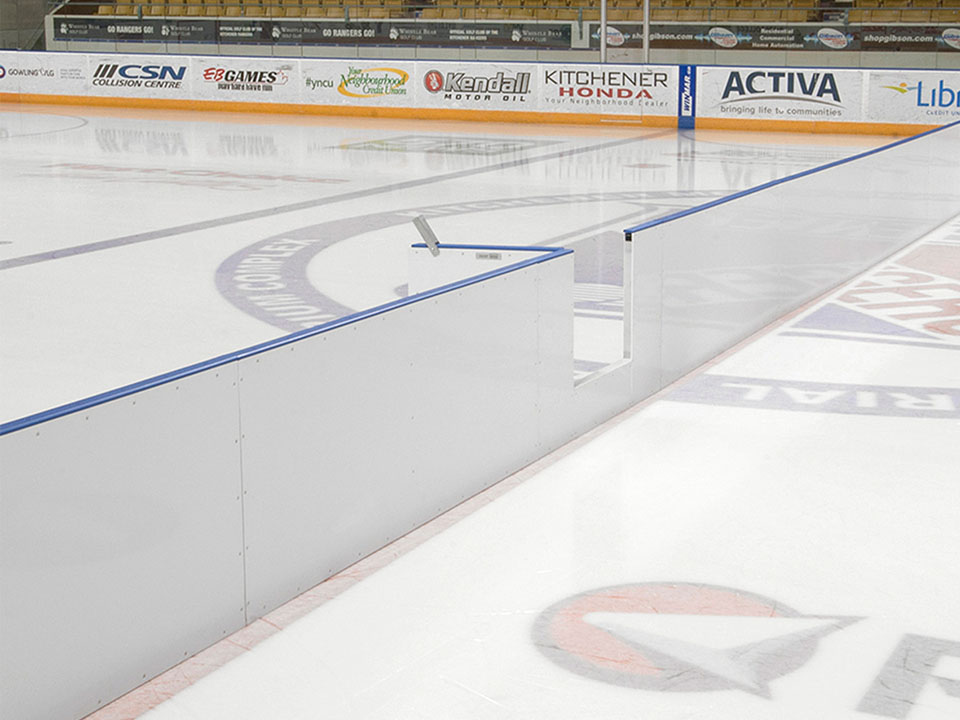
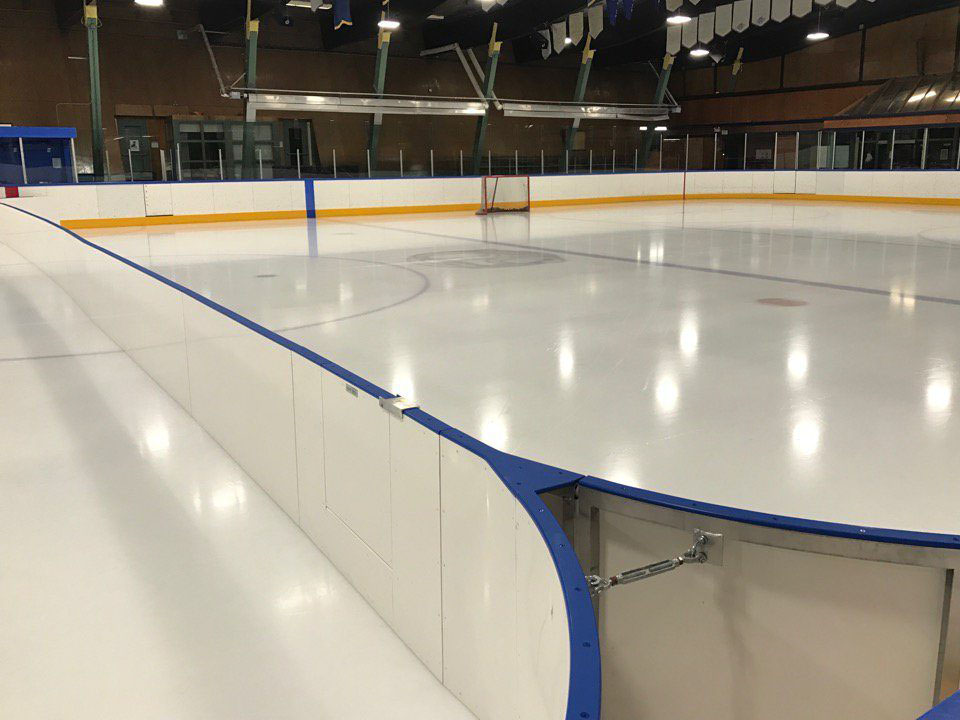
Ice hockey dasher boards are engineered around a violent assumption: bodies will hit them at speed, repeatedly, season after season. That drives design choices you can’t cheat:
- Frame stiffness (steel/aluminum framing, heavily braced corners)
- Anchoring into concrete and/or slab interfaces
- Shielding integration (supports, spacing, deflection behavior)
- Gate hardware and egress compliance
- Consistent rebound geometry so pucks don’t do weird physics in corners
Floorball boards are engineered around a different assumption: the playing surface is finished, the venue is multipurpose, and teardown needs to be fast. That pushes the opposite direction:
- Low mass so two people can move a section without machinery
- Non-invasive feet / bases so you don’t scar gym floors
- Quick-lock joints that tolerate repeated assembly cycles
- Lower board height and no glass “architecture” hanging off the top
When a vendor tells you they sell “multi-sport rink boards,” I read it as: they’ll sell you compromises.
What actually interchanges (and what doesn’t)
Here’s the part insiders don’t say out loud: the only “panel” you should expect to swap across sports is the wear layer—the stuff you plan to replace anyway.
If you’re sourcing polymer wear surfaces, the conversation gets real, fast: thickness, screw pull-through, thermal movement, cleaning chemistry, and abrasion rates. This is where UHMWPE (C₂H₄)ₙ and HDPE keep showing up, because they’re boring in the best way—low moisture uptake, decent impact behavior, and predictable wear.
That’s why I’m not surprised when facilities and board fabricators end up talking to materials suppliers rather than “sports equipment brands” for the parts that actually fail first:
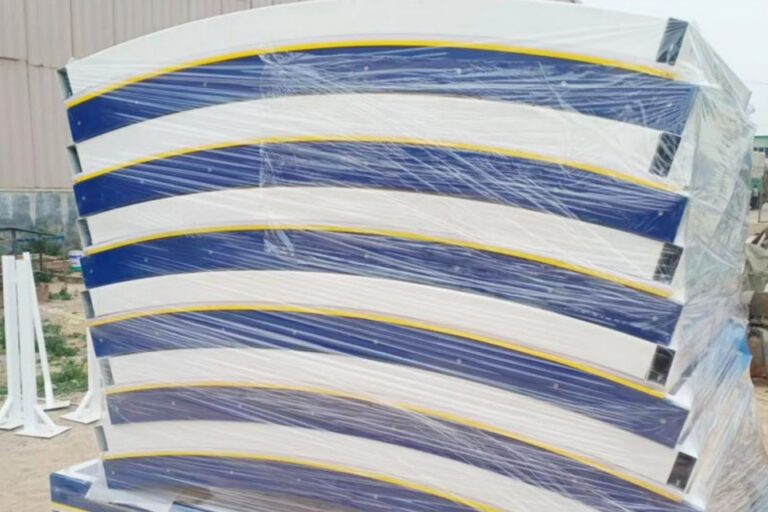
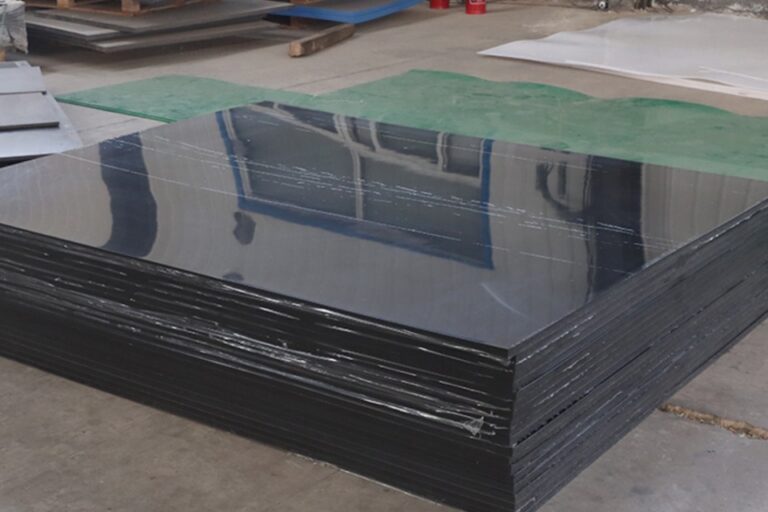
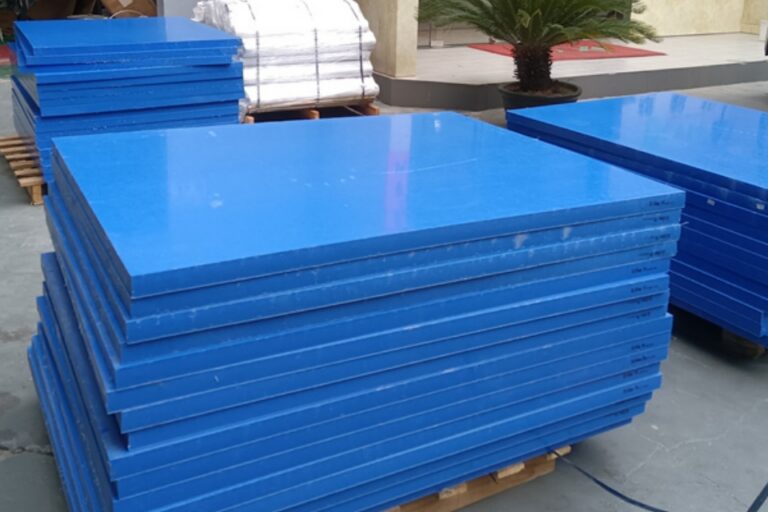
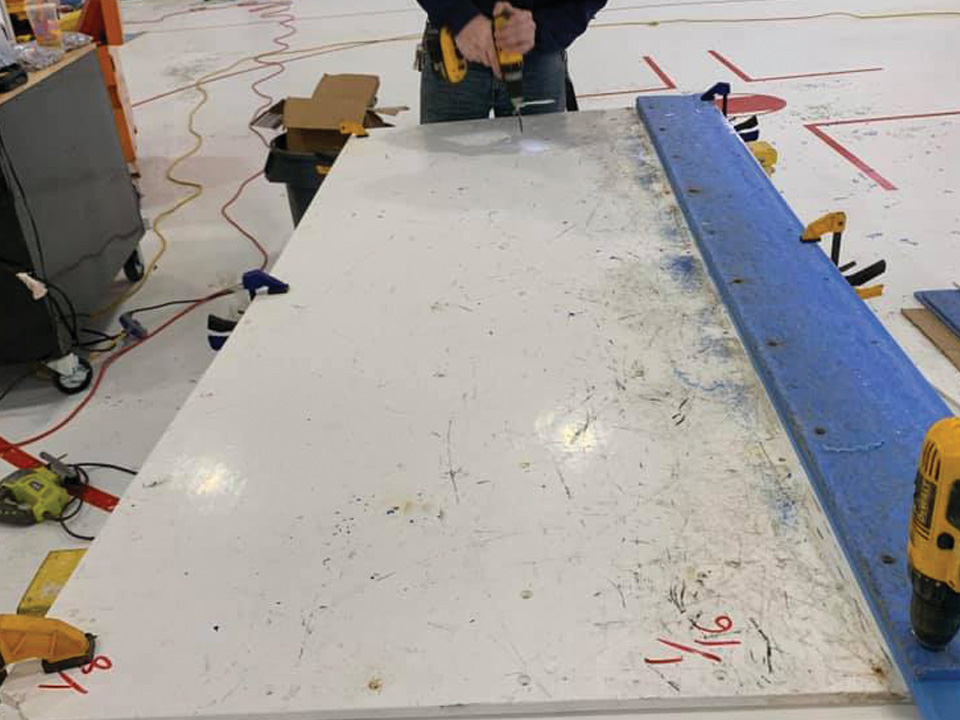
- Board-facing / kickplate stock (often UHMWPE/HDPE sheet you machine and drill to match hole patterns)
- Synthetic ice training surfaces that let teams reduce ice time for shooting and skating reps (if you’ve never priced ice time, you’re not qualified to have this debate)
If you want examples of how operators think in materials rather than marketing, look at products that live or die by abrasion and impact, not hype:
- UHMWPE wear surfaces used in high-density polyethylene board / ice synthetic panel supply chains
- Off-ice training that quietly reduces rink scheduling pressure, like hockey practice shooting pads and ice synthetic panels
- Industrial wear-liner logic applied to sports hardware (same polymer behavior, different venue), like UHMWPE limit plates built for high-abrasion interfaces
But if you think you’re swapping the structural bits—frame, base, glass supports—you’re not swapping panels. You’re swapping liability.
The data nobody likes (because it complicates “multi-use”)
Participation and injuries shape how risk officers think, and risk officers shape what you’re allowed to install.
USA Hockey lists 659,873 total members in 2023–2024 (players + officials + coaches, etc.). That’s not a niche sport; that’s a large exposure surface for facility claims and incident reporting. According to USA Hockey’s membership statistics, the 2023–2024 totals remain substantial. (USA Hockey)
On injuries, a 2024 peer-reviewed analysis using U.S. emergency department data (NEISS) looked at men’s ice hockey–related fractures over a long horizon ending in 2023, and the pattern is blunt: youth and adolescent male players show elevated fracture risk versus older groups. That doesn’t “prove” boards are the cause, but it tells you why operators overbuild anything that interacts with player impact. See the PubMed record for the NEISS-based fracture analysis. (PubMed)
And floorball? It’s lower-contact, but not “no-injury.” A systematic review and meta-analysis (published 2024) compiles injury incidence evidence through early 2023—useful when someone tries to sell floorball boards as if they’re basically inflatable. The review is indexed on PubMed. (PubMed)
Now add budgets. This is where the fantasy dies.
A municipal planning packet from Brooklyn Park (dated January 17, 2024) includes a line-item style cost: $6,813,741 to convert “Ice Arena 1” to multi-court gym space—and that’s before you start playing procurement games with sport-specific equipment. The packet is public as a city document: Brooklyn Park January 17, 2024 packet (PDF). (Brooklyn Park)
If you’re still saying “swap the panels,” you’re not doing facility planning. You’re doing wishcasting.
The standards angle: where “it should be fine” goes to die
Spectator shielding and board systems have standards and test regimes for a reason: pucks and bodies don’t negotiate.
Even materials marketed for rink shielding call out testing alignment with ASTM F1703-13 (a standard referenced in rink shielding contexts). One example is a shielding product page stating it’s engineered to meet ASTM F1703-13 testing. (Snap Vent Plastics)
My opinion: if your multi-sport plan doesn’t start with the standard and end with an engineer, it’s not a plan. It’s a future incident report.
Comparison table: what you’re really buying
| Feature | Ice hockey dasher boards | Floorball rink boards | What “swapping panels” really means |
|---|---|---|---|
| Primary hazard model | High-impact collisions + puck impact | Low-contact collisions + stick/ball impact | Hazard model changes, so structural design changes |
| Typical mass per section | Heavy, equipment-assisted handling | Light enough for manual carry | You can swap wear sheets, not the physics |
| Anchoring | Mechanical anchoring into slab/curb | Non-invasive bases/feet on finished floors | Anchoring is the hidden cost center |
| Shielding integration | Glass/acrylic, supports, gates, deflection behavior | Usually no tall shielding | “Panel swap” ignores shielding architecture |
| Wear surfaces | UHMWPE/HDPE facing + kickplate common | PE/PP/ABS style panels common | Wear-layer replacement is the realistic interchange |
| Conversion time | Hours to days depending on system | Often under an hour for a crew | The moment you add hockey-grade anchoring, speed disappears |
| Budget risk | Liability + maintenance + compliance | Floor protection + storage + assembly labor | Storage and logistics sink “portable” promises |
FAQs
Can you use ice hockey dasher boards for floorball? Using ice hockey dasher boards for floorball means running a gym-floor sport against an ice-rink collision barrier: the board heights, anchoring, kickplates, shielding, and load ratings are built for different hazards, so “swap the panels” usually becomes “rebuild the system” once safety and floor protection are priced in. If you already have hockey boards installed, the practical move is to add floor-protection interfaces and sport-specific “infill” solutions, not pretend the system is interchangeable.
What are portable floorball boards, in plain terms? Portable floorball boards are modular perimeter barriers typically built as low-height, lightweight sections with quick-lock corners, designed to sit on finished floors without mechanical anchoring, so a small crew can assemble a regulation-size playing area in under an hour and remove it without leaving fastener damage. The real constraint is storage volume and transport, not the assembly clips.
What does “interchangeable dasher board panels” actually refer to? Interchangeable dasher board panels are replacement facing and kickplate elements, often UHMWPE or HDPE wear surfaces, that share hole patterns or clamp rails, but they are not a universal board because the frame, base, glass supports, and anchoring still dictate whether the assembly is hockey-safe or only suitable for light-contact sports. If a vendor promises cross-sport interchangeability without a detailed anchoring and shielding spec, treat it as marketing, not engineering.
Which materials hold up best for board facing and kickplates? UHMWPE (C2H4)n and HDPE are common board-face polymers because they resist abrasion and moisture, slide predictably against sticks and skates, and tolerate cleaning chemicals, but hockey environments push you toward thicker, mechanically fastened sheets and impact-resistant shielding, not the thin snap-in plastics sold for gym boards. If you’re replacing wear layers, match thickness to fastener spacing and expect thermal movement—especially near gates and corners.
How much does it cost to convert hockey infrastructure for multi-sport use? A hockey-to-court conversion budget is the full-stack cost of removing ice-specific constraints—floor, drainage, boards, glass, and egress—so even “just making it multi-sport” can run into the millions, as seen in municipal planning packets that price a single-arena conversion in the $6–7 million range before you buy sport-specific equipment. The cheapest “conversion” is often operational: scheduling, off-ice training surfaces, and selective modular add-ons, not construction.
Final Words
If you’re serious about multi-sport use, stop asking whether you can “swap panels” and start asking for a bill of materials: wear layers, fasteners, corner loads, floor interfaces, cleaning chemistry, and replacement cadence. If your current pain is wear and maintenance (not full reconstruction), look at polymer wear solutions like HDPE/UHMWPE board-facing sheet options and training alternatives such as synthetic ice panels and hockey shooting pads—because reducing ice dependency is often the only “multi-use” strategy that doesn’t collapse under its own hardware.