-
Tian Dong Industrial Park, Decheng District Economic and Technological Development Zone, Dezhou City

Load-Spreading Science: PSI to Subgrade — A Practical Guide
If you’ve ever watched a machine “sink” on a jobsite, you already know the truth: PSI on paper isn’t the same as what the soil feels. You can have a nice low ground pressure number, then still get rutting, punch-through, or that ugly “one corner drops” moment. And yeah, everybody starts pointing fingers.
Here’s the argument I’m making: stop treating PSI like the final answer. Treat it like the first clue. The real story is the load path—from contact patch, through your mat or plate, down into the subgrade.
Table of Contents
Ground Pressure (PSI) and Contact Area
PSI is simple math: load divided by contact area. Simple… until the real world shows up.
- Tires don’t load perfectly.
- Tracks bridge sometimes, then don’t.
- Outriggers love to find the soft spot you didn’t see.
- Wet clay acts “fine” right up until it doesn’t.
So when a crew tells you, “It’s only X PSI,” I usually answer: “Cool. On what contact patch, on what base, at what moisture, with what voids?” Because PSI alone can hide the risk.
A practical rule: when you can’t improve the soil fast, increase the effective area. That’s where load spreading plates and mats earn their keep.
Table: Example of surface pressure vs subgrade pressure (test data)
| What’s measured | Value | What it means for your site |
|---|---|---|
| Applied surface pressure | 106 psi | High local pressure at the top surface |
| Subgrade pressure (varies by position) | ~3–7 psi | Load spreads out, soil sees much less stress |
Subgrade Bearing Capacity and Uniform Support
Most failures don’t happen because your “average PSI” was wrong. They happen because support isn’t uniform.
On real sites, that shows up as:
- one outrigger pad printing deeper than the others
- a mat corner “hinging” over a void
- a track edge cutting a groove, then the machine starts crab-walking
- pumpin and pushing water/mud up through fines (yeah, nasty)
If you take only one thing from this guide, take this: your enemy is the soft spot. Not the average.
Ground Protection Mats and Load Spreading Plates
When you lay down mats or plates, you’re doing three jobs at once:
- Area increase (lowering stress on the soil)
- Stiffness increase (reducing bending and edge punch-through)
- Load bridging (spanning minor weak zones so the machine doesn’t “find” them)
But don’t overpromise. A mat isn’t magic. If the subgrade is basically soup, you still need good site prep—proof-roll, undercut, rock, geotextile, whatever your plan is.
Where plastics come in: UHMWPE and HDPE help when you need tough wear, sliding, and repeat use—especially when the crew drags, pivots, and repositions all day.
UHMWPE Sheets and HDPE Sheets for Wear Surfaces and Slip Layers
On industrial jobs, people often forget a second kind of load spreading: controlling friction and wear at contact surfaces.
If your plate grabs the ground too hard, you get shear and tearing. If it grips unevenly, you get point loads. If it wears out fast, you lose thickness and stiffness, then the whole stack performs worse.
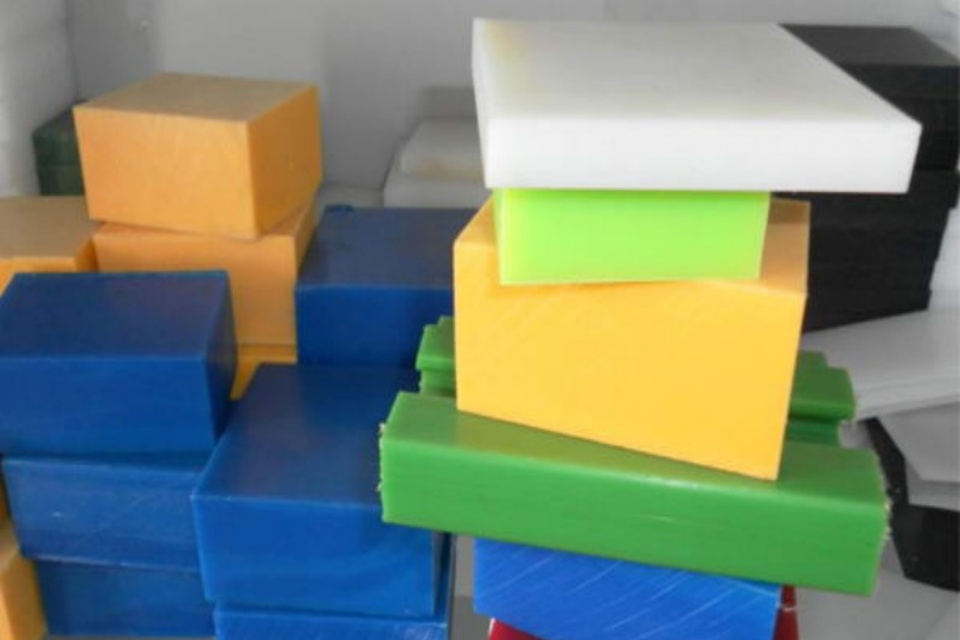
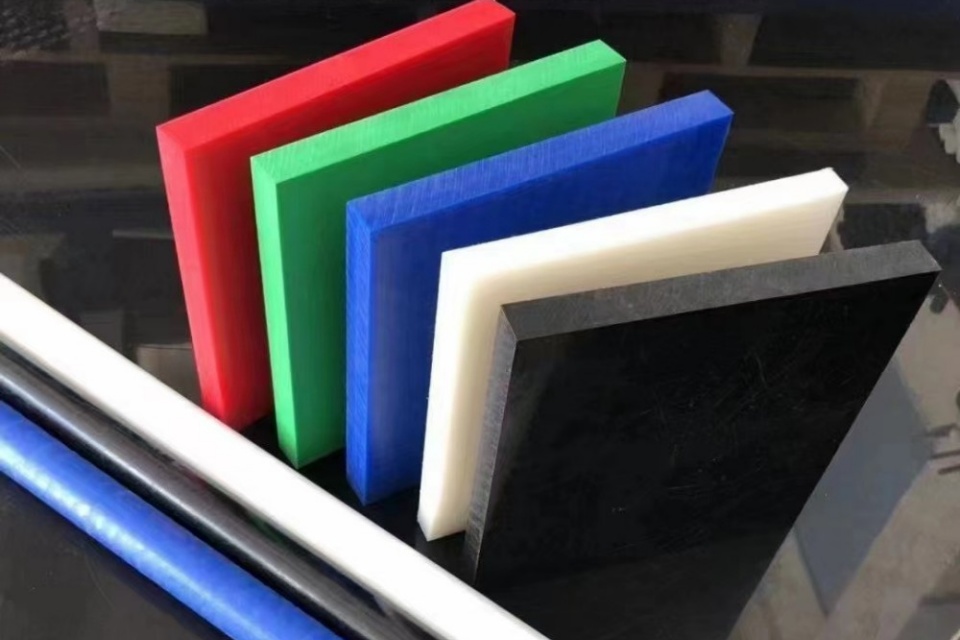
That’s why many crews use UHMWPE sheets as wear layers, liners, or sliding interfaces in heavy-duty setups. Our UHMWPE Sheets page is built for that kind of B2B demand—custom sizes, bulk orders, OEM/ODM workflows, and quick response for buyers who don’t have time to babysit a supplier.
And yes, you can mix materials. I’ve seen teams pair UHMWPE slip layers with rubber components from Dongxing Rubber (like rubber pads or grip layers) when they need both controlled sliding and controlled bite. It’s not fancy. It’s just practical, and it keeps the stack stable.
Coal Bunker Limit Plates and Load Paths in Bulk Material Handling
Load spreading isn’t only a “muddy jobsite” thing. It also shows up in plants.
In coal handling, you’ve got impact, abrasion, and flow problems all fighting at once. Limit plates help control material movement and protect structure zones that get hammered. Our Coal Bunker Limit Plates focus on high-wear conditions and B2B supply needs—when you need consistent parts, not random batches.
Here’s the same PSI-to-subgrade logic, just in a different outfit:
- You manage where force concentrates
- You spread load where it needs spreading
- You reduce wear where friction and impact live
It’s the same science, different scene.
Field Checklist: From PSI to Subgrade
This is the quick, not-too-academic checklist I like:
Subgrade moisture and “soft spot” risk
- Walk it. Probe it. Don’t just stare at it.
- If you see pumping, rutting, or shiny wet fines, assume the subgrade is weak.
Contact patch reality
- Confirm what actually touches the ground (tire patch, track edge, outrigger pad).
- Watch for uneven contact. That’s where the load spikes.
Load-spreading layer choice
- Thin flexy layer = edge stress goes up.
- Stiffer stack = better distribution, less punch-through.
Interface control (wear + sliding)
- If the stack grabs and twists, you get shear damage.
- UHMWPE slip/wear layers can help keep movement predictable.
Reuse and repeatability
- If you run daily moves, you want materials that don’t “crumble” after a week.
- Consistent thickness and surface condition matter more than people admit.
Decision Table: What to change when the ground starts failing
| Symptom on site | Likely cause | What usually fixes it |
|---|---|---|
| Deep rutting under one edge | Soft spot / uneven support | Bigger footprint + stiffer layer + spot repair |
| Mat corners punching in | Bending/edge stress | Thicker/stiffer plate, better base leveling |
| Stack “walks” or shifts | Too much shear / uneven friction | Add a controlled slip layer (often UHMWPE) |
| Surface chews up fast | Abrasion + grit | Better wear material, smoother load path |