-
Tian Dong Industrial Park, Decheng District Economic and Technological Development Zone, Dezhou City

Preventing Cold Flow And Creep In Load-Bearing PE Components
If you use PE or HDPE blocks as pads, liners, or bearing parts, you’ve maybe seen this:
the part looks perfect on day one, then after some months the surface “flows” sideways, bolts sit deeper, and gaps appear.
That’s creep and cold flow.
And once it happens, you don’t just lose looks, you lose safety margin, too.
In this article we’ll talk about how to keep your load-bearing PE components in shape, and how Dongxing Rubber uses this thinking when we supply HDPE sheets and custom parts.
Table of Contents
What Is Creep And Cold Flow In Load-Bearing PE Components?
Creep is slow, permanent deformation under constant load.
The load is not crazy high, but it never goes away.
For metals, creep is mostly a high-temperature story.
For PE and HDPE, creep happens even at room tempereture, especially under dead load.
Cold flow is how users often describe what they see:
- edges of an HDPE pad mushroom out over time
- bolt holes become a bit oval
- a flat surface develops a dish in the middle
Important points for design:
- Creep depends on stress level, time, and temperature
- PE “remembers” the load history – plastics don’t forget load so easy
- You can’t design only from a short-term stress–strain curve
So your goal is simple:
keep stress and tempereture low enough, and support the part so it can’t slowly squeeze out.
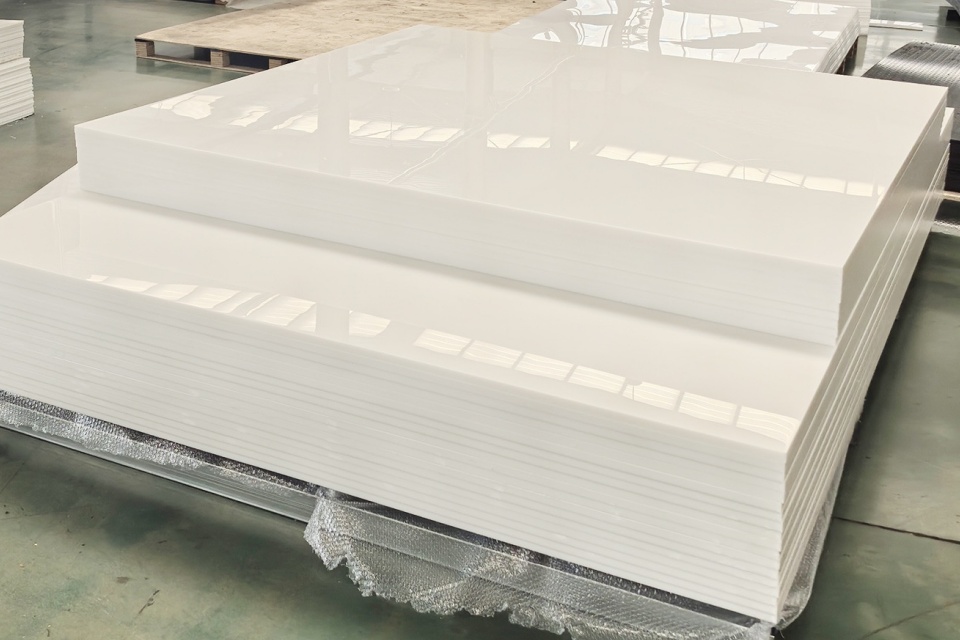
Limiting Stress And Temperature In HDPE Sheets
For creep, average stress matters more than one-time peak.
Designers like to talk about safety factor and creep budget here.
General rules of thumb (not a standard, just engineering sense):
- lower stress = slower creep
- higher temperaturen = faster creep
- long life (10+ years) needs very conservative stress
You can use a simple map like this when you think about your HDPE pads and plates:
| Design situation | Typical compressive stress on PE (MPa) | Temperature range (°C) | Expected creep risk* | Comment |
|---|---|---|---|---|
| Light duty support plate | < 3 | 0–30 | Low | Good for long-term static loads |
| Medium duty crane outrigger pad | 3–6 | 0–40 | Medium | Need good safety factor and backing |
| Heavy static block in warm enviroment | 6–10 | 30–60 | High | Expect visible cold flow if not supported |
| Hot process block / pad near equipment | > 10 | > 60 | Very high | Better change design or material |
Just to show the trend. Real design must use actual creep data from material tests.
Use this table like a quick “sanity check”.
If you see you’re in the right-side / bottom cells, creep will be your daily guest.
So, what can you tweak?
- Make the contact area bigger → lower surface stress
- Increase thickness where compression is high
- Avoid mounting HDPE too close to hot pipes, motors, ovens
For heavy long-term jobs, you don’t want the part “just OK”.
You want it overdesigned a bit.
Supporting PE Parts Properly: No Freestanding Pads
One classic mistake: a thick PE pad standing alone, loaded like a short column.
PE is not steel.
If you let it stand alone with high dead load, it will bulge sideways slowly.
Use Steel Backing And Side Restraints
A more robust layout looks like this:
- HDPE sheet on top of a steel plate → steel carries bending, PE handles contact and impact
- Side stops or frame to stop the sheet from “walking out”
- Enough bolts so load is shared, not all on one “hot spot”
People in the field call this a “no freestanding PE” rule.
Good scenarios:
- Fender pads: HDPE facing plate bolted to a steel backing
- Crane outrigger pads: HDPE layers sandwiched with steel or at least heavy steel pads under the plastic
- Machine feet: HDPE liner inside a steel shoe, not just sitting free on concrete
When you design your next part, just ask:
“If I leave this HDPE block alone for 5 years under this dead load, where will it flow?”
If the answer is “it pushes out of the frame”, you still need more support.
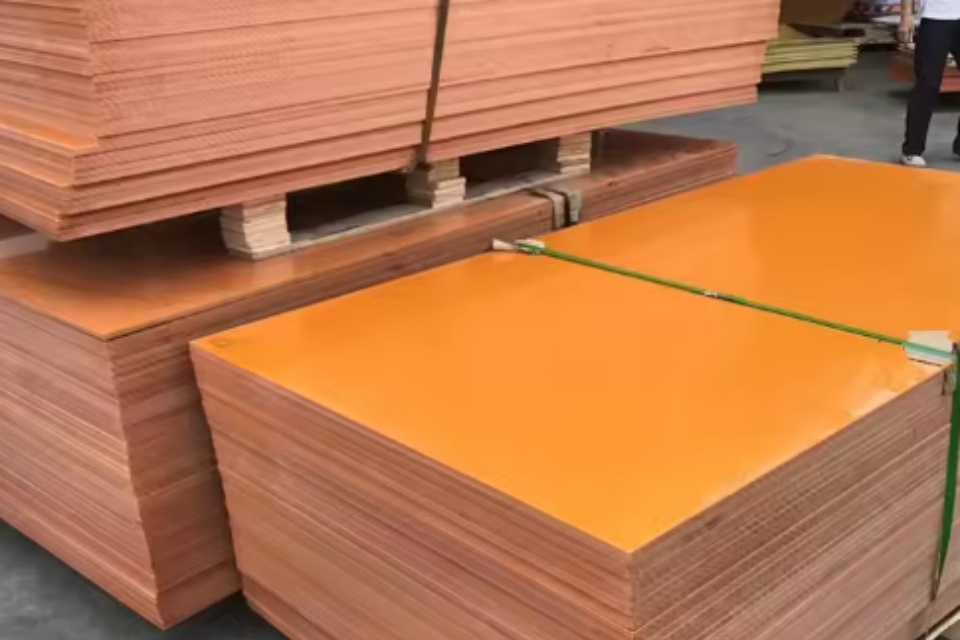
Spreading Contact Pressure To Avoid Creep Hot Spots
Creep starts where stress is highest.
In many cases that’s not the average area, it’s a point load or a line contact.
Typical “stress hotspot” situations:
- A narrow steel foot pressing into a flat HDPE pad
- Bolt head or washer too small, biting into the surface
- Ground protection mat sitting on one stone edge instead of flat soil
To control this, you can:
- Use larger washers or load spreading plates
- Shape the steel foot and the PE pad so they match → more area, less pressure
- Add ribs or a second layer to share load across more surface
For your ground protection & road mats, this means:
- Think about the wheel contact patch, not only mat thickness
- Avoid mats resting on three small stones; give them more solid sub-base
- For tracked machines, make sure pad pattern and mat design don’t create crazy point loads
You’re basically hunting and killing pressure hotspots before they kill your mat.
Choosing Creep-Resistant PE Grades And Compounds
Not all PE behaves same under long-term load.
Some quick guidelines:
- HDPE: good balance of stiffness and toughness, common for pads and sheets
- UHMWPE: excellent wear, very good for sliding and impact, but you still need good support
- Filled grades (glass, minerals): often stiffer, less creep, but maybe lower impact resistance
For load-bearing blocks, outrigger pads, and HDPE sheets under static load, you usually want:
- higher density
- higher crystallinity
- a grade that’s tested for creep, not only for tensile strength
This is where a producer like Dongxing Rubber helps:
- We know which HDPE sheets fit long-term pads
- We match grade to duty cycle: light support, heavy crane, port fender, ice rink dasher, etc.
You don’t have to become polymer scientist.
But you should ask your supplier about creep curves and long-term data, not only “is this HDPE strong?”.
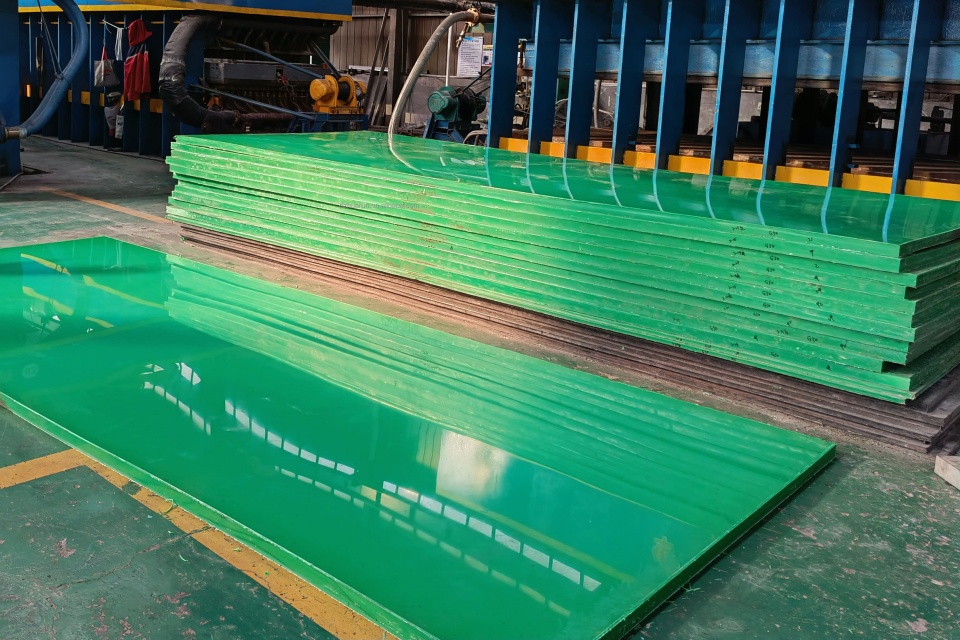
Designing With Long-Term Creep Data, Not Just One Test
A single tensile test at 23 °C tells you almost nothing about 10-year deformation.
For serious load-bearing components, you want at least:
- Creep modulus vs time (1 h, 10 h, 1000 h…)
- Data at your real working tempereture
- Data at stress levels close to your design stress
Engineers sometimes talk about “creep budget”:
- How much permanent deformation can this part accept over its life?
- 0.5 mm? 2 mm? 10 mm?
If you know the budget, you can read the creep curve and say:
- “At 4 MPa and 30 °C, after 5 years we still stay inside 1 mm deformation. OK.”
- Or “At 8 MPa and 50 °C this part goes way over our budget. Need lower stress or different layout.”
For many customers, Dongxing Rubber doesn’t only sell a block.
We also check:
- load per pad
- size and bolt pattern
- expected life, like 5–10 years
Then we suggest thickness, grade, and sometimes even frame design, so the creep behaviour stays under control.
Real-World Scenarios With Dongxing Rubber HDPE Sheets
Let’s finish with some simple, real-life style cases.
1. Crane Outrigger Pad That Slowly Sinks
You put a crane on HDPE blocks.
Day one looks great.
After one season, you see:
- pad edges flow,
- metal foot leaves a deep “print”,
- it’s harder to level the crane.
Why? Stress too high in a small zone, maybe warm climate.
Fix ideas:
- bigger pad size → lower surface stress
- steel backing plate under HDPE
- match the foot shape better to the pad
This is exactly the kind of job where our HDPE sheets get cut and laminated into multi-layer pads.
2. Ground Protection Mats For Repeated Events
You lay mats on grass for trucks and lifts.
At first everything is flat.
Later you see “waves” and rut copies in the mat.
Part of that is soil, part is creep of the plastic under repeated dead load.
How to improve:
- choose thicker mat or stiffer grade
- control sub-base (not sitting on sharp rocks)
- check wheel load and contact patch, not only total truck weight
Here customers often say “we need set-and-forget mats”.
In reality, you need mats designed with a bit of overkill on stress level and support.
3. Ice Rink Or Sports Boards Leaning Outward
Boards use PE or UHMWPE facing as dasher.
If backing is weak, panels start to lean a little out after many seasons.
You think “structure problem”.
Many times it’s also cold flow of PE and foam layers behind.
Better design:
- correct frame stiffness
- stiffer PE or HDPE sheet for the main impact zone
- more even support behind the sheet, less gaps
Again, it’s about support + stress, not only material name.
In short, preventing cold flow and creep in load-bearing PE components is not magic:
- Keep stress and tempereture under control.
- Never leave PE alone – give it steel backing and side support.
- Kill pressure hotspots before they kill your pad.
- Pick creep-resistant PE grades and ask for long-term data.
If you already fight with deformed pads, mats, or boards, you can send your drawing and working conditions to Dongxing Rubber.
We can look at your stress levels, suggest a better HDPE sheet grade and layout, and help you build parts that stay in shape for the long haul, not only for the first photos.