-
Tian Dong Industrial Park, Decheng District Economic and Technological Development Zone, Dezhou City

Thermal Expansion In PE Sheets: Designing For Fit And Flatness
If you work with PE sheets, you already know one thing: they move.
Not just a tiny bit. With temperature, they really walk around.
In this article, let’s talk about how that movement affects fit and flatness, and how you design around it in real projects with Dongxing Rubber style thinking: practical, no drama, focus on production.
Table of Contents
Why Thermal Expansion In PE Sheets Matters
PE doesn’t behave like steel or aluminum. Its thermal expansion is much higher.
Engineers usually talk about a value called coefficient of linear thermal expansion (CLTE). You don’t need complex math in daily work, but you do need to respect the numbers.
Typical values (rough ranges):
- Carbon steel: about 12 × 10⁻⁶ /°C
- Aluminum: about 23 × 10⁻⁶ /°C
- HDPE / PE sheets: about 120–180 × 10⁻⁶ /°C
- UHMWPE: sometimes 150–230 × 10⁻⁶ /°C
So PE can move 5–10 times more than metal for the same temperature change.
Imagine a 2 m PE panel on a hot outdoor machine. Temperature jumps 30°C from night to afternoon. A typical PE sheet can grow almost 9 mm in length. For a press-fit or tight frame, that’s huge.
If you treat PE like steel, the sheet will:
- Buckle
- Crack around holes
- Push against frames and bend
- Lose flatness and ruin your sealing
This is why thermal expansion must sit in your design checklist from day one.
How Much Will Your PE Sheet Move? (Thermal Expansion Basics)
The basic formula is:
ΔL = α × L × ΔT
Where:
- ΔL = length change
- α = CLTE (per °C)
- L = original length
- ΔT = temperature change
Thermal Expansion Example Table For PE Sheets
Assume α = 150 × 10⁻⁶ /°C (a typical design value for PE).
| Sheet length L (m) | Temperature change ΔT (°C) | Estimated expansion ΔL (mm) | What this means in real life |
|---|---|---|---|
| 1.0 | 20 | 3.0 | Short panels still move; tight frames start to squezze. |
| 2.0 | 30 | 9.0 | Long panels need slot holes and gaps, or they will bow. |
| 3.0 | 40 | 18.0 | Big plates on steel structure must “float”, not be locked. |
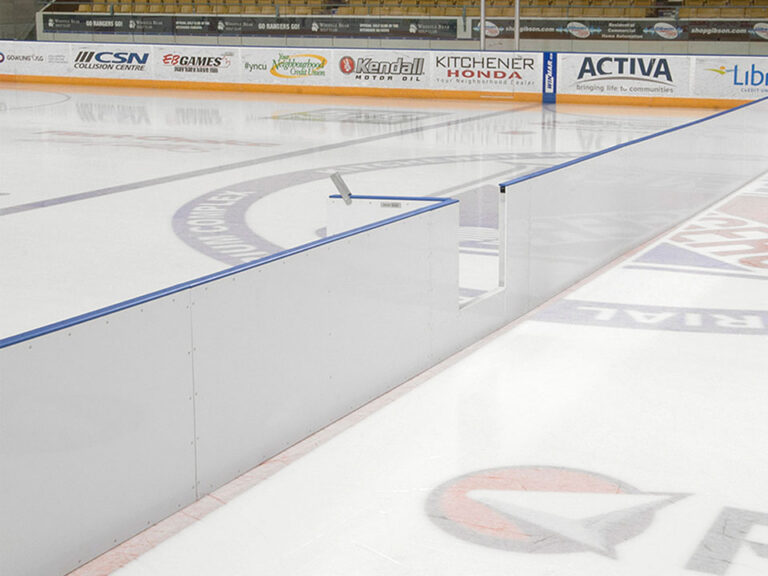
These are not “lab only” numbers. You really see this at sites: conveyors, hoppers, chute liners, dump truck beds, ice rink boards, ground mats, etc.
Designing For Fit: Slots, Gaps And Floating Fasteners In PE Sheets
Because PE moves so much, you don’t fight the expansion.
You let it move in a controlled way.
Here are common tricks that Dongxing Rubber customers use in PE and UHMWPE sheet projects:
1. Oversized and slotted holes
Don’t drill a 10 mm hole for a 10 mm bolt and clamp it like metal.
Instead:
- Use oversized holes
- Or use slotted holes along the main expansion direction
- Add a big washer or a steel clamp bar so the head still holds the sheet
This way, the bolt locks the sheet down, but not in place. The sheet can slide a bit under the washer as it grows and shrinks.
2. Leave gap between panels
For long runs of lining, chute panels, or side walls:
- Leave a small gap between sheet edges
- Think in terms of “thermal gap” per meter, based on your ΔT range
- Keep the gap even and repeatable, so it still looks neat
Instead of saying “we want zero gap”, you design a fixed gap that looks clean but gives the sheet breathing space.
3. Separate structure and liner
When you mount PE liners on steel or nylon sheets structures, treat liner and frame as two systems.
The steel frame is stiff, moves very little.
The PE liner is flexible, moves a lot.
Let the PE sit on the frame with sliding behavior, not as if you welded it solid.
You can even combine UHMWPE plates with nylon sheets when you need better dimension stability in the base and low friction on top.
Designing For Flatness: Controlling Warpage And Crown
Flatness is not only about machining. It’s also about temperature.
PE sheets don’t conduct heat very well. So if one side gets hotter than the other (sunlight, hot material, heater, etc.), you create a temperature gradient inside the sheet. Hot side expands more. Cold side tries to hold it back. Result: the sheet bends like a bow.
You often see:
- “Crown” in the middle of a panel
- Edges lifting off from the support
- Board leaning to the cold side
To keep panels flatter:
- Support evenly
- Use enough support points or frames
- Avoid big unsupported spans on hot areas
- Avoid one-side cooking
- If the sun hits one side, try to ventilate the back
- Don’t close the back with hot air trapped in
- For ice rink products and dasher boards, consider how warmer arena air hits one side of the boards while ice chills the bottom.
- Use thicker plate when needed
- Thicker sheet is stiffer, so it bends less for the same internal stress
- But remember it still expands the same percentage, so you still must keep the movement path
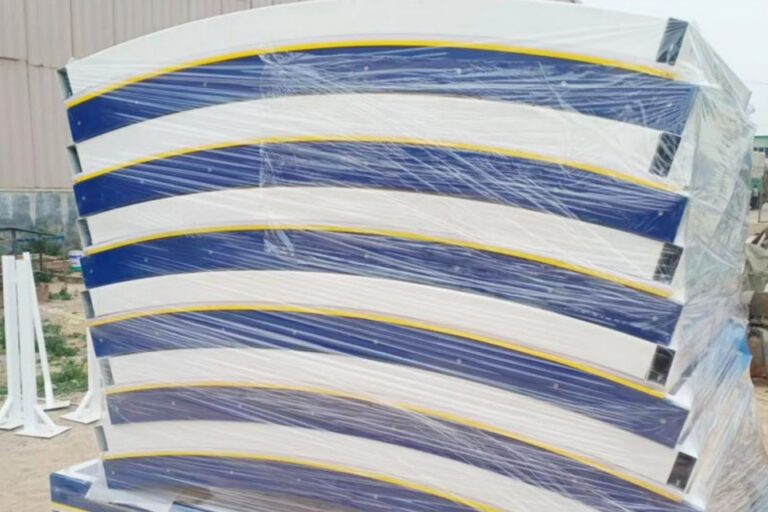
For example, when Dongxing Rubber supplies large ground protection & road mats or rink boards, we talk with clients about where the sun hits, where hot slurry or bulk falls, and how often they wash with hot water. This is not “nice to know”; it is stability design.
Material Choices: PE Vs Nylon Sheets For Dimensional Stability
Sometimes PE is perfect: wear resistance, impact, slick surface.
Sometimes you also care a lot about dimensional stability and hole holding.
That’s where nylon can enter the conversation.
Compared with PE:
- Nylon usually has lower thermal expansion than PE
- Higher stiffness
- Better performance at higher service temperature (before softening)
If you need a structure that keeps its shape but still wants plastic advantages, you can:
- Use nylon sheets as base plates or machine parts
- Add UHMWPE liners on top where you need very low friction and high wear resistance
This “hybrid” approach is very common in bulk handling, marine, sliding guides and other scenarios. Dongxing Rubber already do OEM/ODM on both MG engineering plastic sheets and PE/UHMWPE lining, so we see this mix design a lot in real orders.
You can also explore other product lines like ground mats, ice rink panels, or quick-mats style panels to match your environment and temperature profile, all under the same engineering logic.
Simple Design Checklist For PE Sheet Projects
Before you send drawing to production, you can run through a quick checklist like this:
- Define temperature range
- Indoor? Outdoor?
- Any cleaning with hot water or steam?
- Any contact with hot material?
- Estimate expansion
- Use one simple value for α (for example 150 × 10⁻⁶ /°C)
- Calculate ΔL for longest direction
- Think: “Can my frame absorb that movement?”
- Choose fixing strategy
- Oversized or slotted holes in expansion direction
- Big washers or clamp bars
- Floating fasteners where possible
- Plan panel gaps and joints
- Leave gaps between sheet edges
- Use cover strips if you want nicer look and no debris catching
- Check flatness risk
- Enough supports under sheet?
- Any “hot one side / cold other side” scenario?
- Should you use thicker sheet or stiffer material like nylon under it?
- Match material to scenario
- Sliding, impact, low friction: PE / UHMWPE sheets, liners, PP/PE products
- Structural base, machined parts: nylon sheets, MG engineering plastic sheets
- Outdoor access roads, crane pads: ground protection & road mats
- Sport ice, training rinks: ice rink boards and synthetic ice panels
Dongxing Rubber, as a high-performance engineering plastic products manufacturer, spends a lot of time not just cutting sheets, but helping customers avoid these “mystery warpage” problems. When you think about thermal expansion early, you save install time later, and you don’t need to rework panels on site.
Don’t fight thermal expansion, design around it.